Supporting Continuity of Wound Care in Gaza: Glia
Building Care Around Local Systems
In March 2026, our partner Glia opened complex wound care services at Nasser Hospital in Gaza, Palestine.
The service represents more than a new site for care. It is part of Glia’s broader effort to invest in Palestinian-led healthcare infrastructure and ensure that patients with complex injuries can continue receiving specialized treatment within Gaza’s existing health system.
For Hikma Health, our role is to help ensure that the information needed to deliver that care remains accessible, organized, and useful, even in an environment where connectivity and infrastructure cannot be taken for granted.
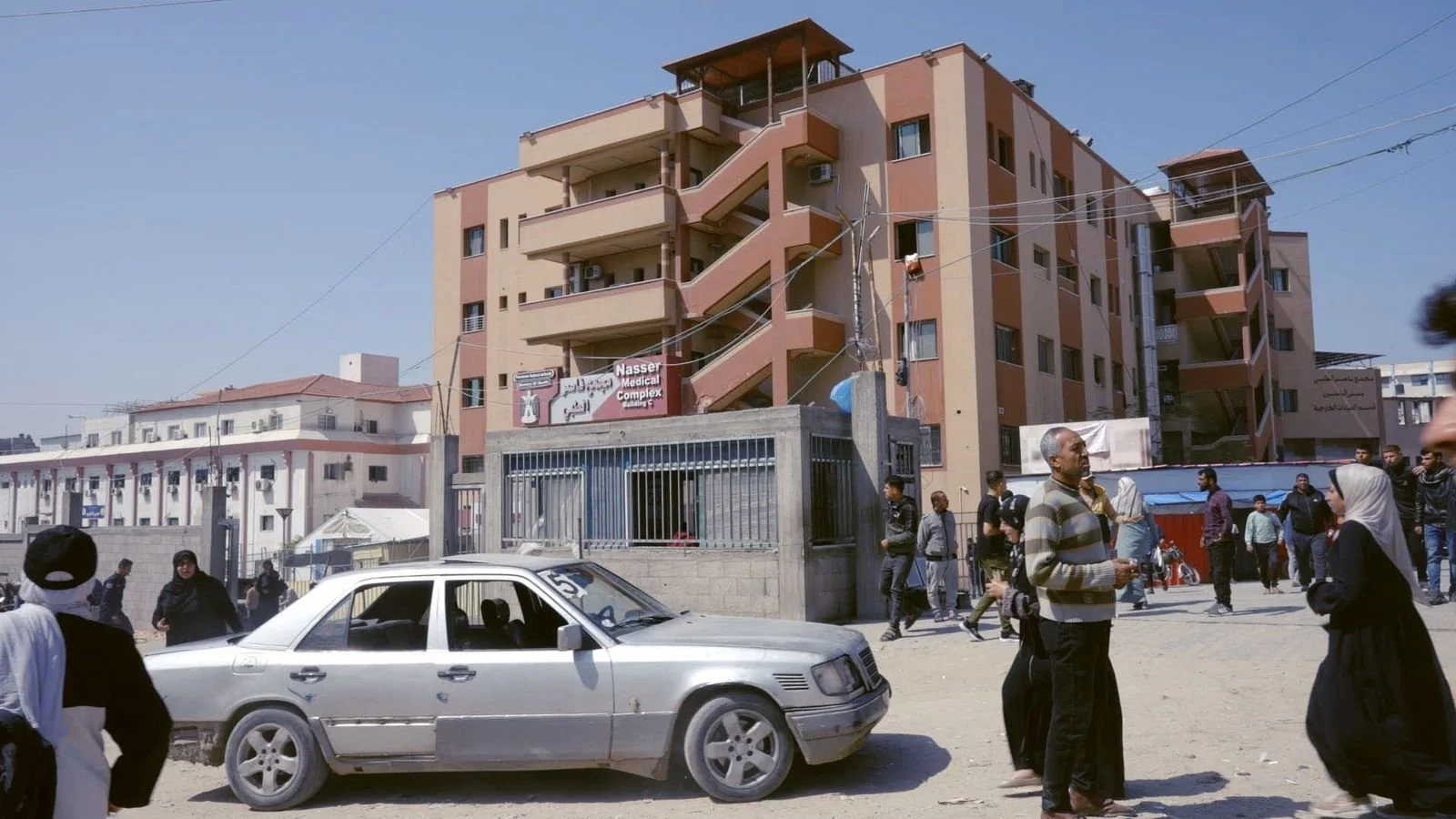
Nasser Medical Complex in Khan Younis, Gaza. Image courtesy of Watermelon Pictures.
Glia has worked alongside Palestinian clinicians, engineers, and communities for more than a decade. Its work in Gaza includes locally manufactured open-source medical devices, emergency bleeding-control initiatives, clinical training, and direct patient care.
In March, Glia transitioned from operating a field clinic to establishing complex wound care services within Nasser Hospital. The service provides inpatient and outpatient care through a multidisciplinary Palestinian team treating complex wounds, burns, infections, and injuries requiring ongoing treatment and rehabilitation. Glia is also exploring mobile wound care to reach patients who cannot reliably travel to the hospital.
A Growing Need for Wound Care
Since opening, the service has treated 3,612 patients.
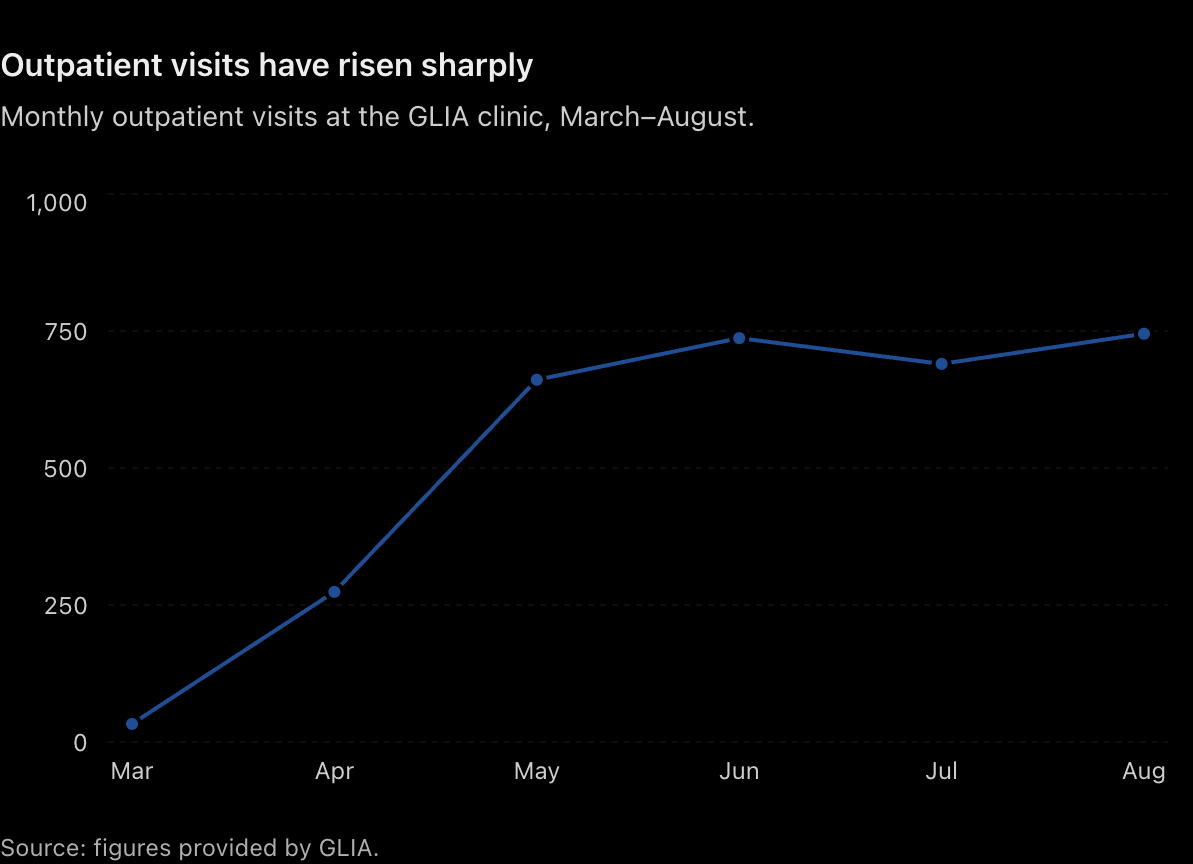
Monthly outpatient visits increased from 33 in March to 745 in August, reflecting both the growth of the service and continued demand for wound care.
For many patients, getting to the clinic remains difficult.
More than 100 patients missed follow-up appointments over six months because they were unable to reach the clinic, reinforcing the need for approaches that can bring care closer to patients.
Why Continuity Matters
Many wounds cannot be treated in a single visit.
Patients may require repeated dressing changes, monitoring for infection, surgical consultation, rehabilitation, and follow-up over weeks or months. A clear clinical history helps clinicians understand how a wound is progressing, what treatments have already been provided, and what needs to happen next.
For healthcare workers managing high patient volumes under extraordinary conditions, quickly accessing information from previous visits can make that continuity easier.
Bringing Digital Records Into the Workflow
Hikma Health partnered with Glia to introduce our electronic health record system into the clinic's workflow.
Our EHR is a free, open-source , and designed for healthcare organizations operating in humanitarian and resource-constrained environments. The system is customizable, multilingual, and built to function in environments where reliable internet access cannot be assumed.
At the wound clinic, the EHR allows the clinical team to create and maintain longitudinal patient records rather than treating every encounter as an isolated visit. Clinicians can document patient information, injuries, treatment, follow-up visits, and other relevant clinical information in a record that can be revisited as the patient moves through care.
From Patient Records to Useful Health Data
An electronic health record should do more than replace paper.
As information accumulates, structured clinical data can help healthcare organizations understand who they are serving, what types of care patients need, and how patients are progressing over time.
For Glia, the data emerging from the wound clinic is beginning to provide a clearer picture of both patient outcomes and the challenges surrounding continued access to care.
What is the data telling us?
88.6% of wounds improved or healed
- 58.4% improved and 30.2% fully healed.
Demand for care remains high
- The clinic recorded 745 outpatient visits in August.
Access remains a barrier to follow-up care
- More than 100 patients missed follow-up because they were unable to reach the clinic, highlighting the need for mobile care.
Burns and post-surgical wounds are most common
- These cases often require ongoing monitoring and repeated care over time.
Together, these records can help the clinical team monitor outcomes, identify patterns, and better understand where gaps in care remain.
“Hikma Health allows our team to document patient information and follow patients as they move between the hospital and outpatient clinic.
That continuity is critical, it ensure our clinicians have the information they need to provide the highest quality care at every stage of treatment.”
- Dr. Tarek Loubani, Medical Director, Physician
Technology Designed for Difficult Environments
Gaza demonstrates why digital health tools cannot be designed around assumptions of constant connectivity, stable infrastructure, or abundant technical resources.
Hikma Health's EHR is designed to work offline and to be configured around the workflows of individual organizations. Rather than requiring clinics to redesign care around software, our approach is to adapt the technology around the realities of the people using it.
This is also an area where Hikma Health and Glia share a similar approach. Both organizations develop open-source technologies intended to strengthen local capacity and remain adaptable to the communities and healthcare workers using them.
Glia has demonstrated this through its open-source medical devices and locally driven work in Gaza. Hikma Health approaches digital health infrastructure with the same principle: tools should be accessible, adaptable, and ultimately useful to the communities and healthcare workers who rely on them.
What We're Learning Together
Our work with Glia is also helping us understand what an EHR needs to look like in one of the most challenging healthcare environments in the world.
Every implementation teaches us something.
As use of the EHR expanded, Glia and Hikma Health identified opportunities to strengthen both security and the day-to-day user experience. Given the sensitivity of health information in the Palestinian context, the teams conducted a broader security review, strengthening safeguards, permissions, and data protection across the system.
Clinicians’ use also surfaced opportunities to improve workflows, including forms, documentation processes, and other features that make the system easier and more reliable to use in a busy clinical setting.
These are the kinds of lessons that only emerge through implementation: seeing how technology performs in practice, listening to the people using it, and continuing to adapt.
Beyond One Deployment
The lessons from this partnership do not remain confined to one deployment. They inform how we continue strengthening Hikma Health’s tools for humanitarian organizations and healthcare providers around the world.
Ultimately, this work is about something much simpler than technology.
It is about making sure that when a patient returns for care, their story does not have to start over.
It is about giving healthcare workers the tools to preserve that story, understand it, and use it to provide better care.